- Overview
- Products
- Industries
- Services
Empowering You Through Digital Transformation
We share news, insights, analysis and research - tailored to your unique interests - to help you deepen your knowledge and impact.
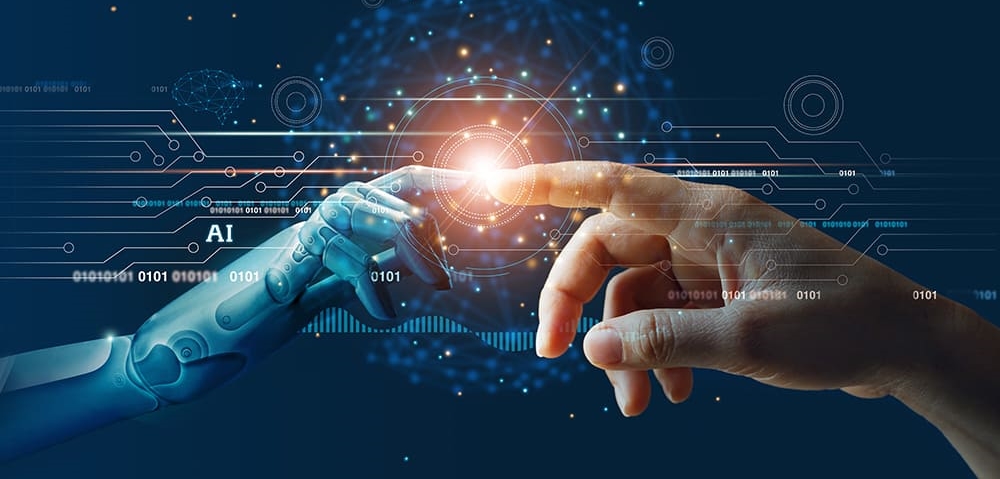
Many businesses take up artificial intelligence (AI) technology to try to reduce operational costs, increase efficiency, grow revenue and improve customer experience. For the greatest benefits, businesses should look at putting the full range of smart technologies - including machine learning, natural language processing and more - into their processes and products. However, even businesses that are new to AI can reap major rewards.Artificial intelligence impact on business By deploying the right AI technology, your business may gain the ability to:
According to a recent study, the main driving force for using AI in business was competitor advantage. After that, the incentive came from:
Benefits of AI and humans working together Research suggests that AI doesn‘t always perform best on its own. AI technologies are great at driving or even replacing the lower-level, repetitive tasks, but businesses often achieve the greatest performance improvements when humans and machines work together. To make the most of this powerful technology, you should consider AI as a means of augmenting rather than replacing human capabilities.
Whatever your reason for considering AI, the potential is there for it to change the way your business operates. All it takes to start is an open-minded attitude and a willingness to embrace new opportunities wherever and whenever possible.
Keep in mind, however, that AI is an emerging technology. As such, it is changing at a fast pace and may present some unexpected challenges. Artificial intelligence can deliver significant benefits when implemented strategically. Businesses can use AI to automate repetitive tasks, analyze large volumes of data, and improve operational efficiency. By reducing the time spent on routine activities, employees can focus on higher-value work that requires creativity, problem-solving, and human interaction. This can help organizations improve productivity while making better use of available resources.
Successful adoption of AI often begins with identifying specific business challenges that technology can help address. Rather than introducing AI for its own sake, businesses should focus on areas where it can provide measurable value. This may include customer support, inventory management, marketing analysis, financial forecasting, or process automation. Establishing clear objectives can help ensure that AI investments support wider business goals.
Data plays a critical role in the effectiveness of AI systems. The quality, accuracy, and relevance of the data used can directly affect the results produced by AI tools. Businesses should establish processes for collecting, managing, and reviewing data to ensure reliable outcomes. Regular monitoring and maintenance can help identify issues early and improve the overall performance of AI-driven solutions.
It is also important to maintain appropriate human oversight. While AI can assist with decision-making and provide valuable insights, it should not replace professional judgement in situations that require context, experience, or ethical consideration. Employees should understand how AI tools work, their limitations, and when human intervention may be necessary. Combining AI capabilities with human expertise often leads to more effective outcomes.
As AI technology continues to evolve, businesses may need to invest in employee training and skills development. Providing staff with opportunities to learn about AI can help improve adoption and increase confidence in using new tools. Building internal knowledge can also help organizations identify additional opportunities for innovation and maintain a competitive advantage in their industry.
Businesses should also stay informed about emerging regulations, industry standards, and best practices relating to AI. Developing clear policies for responsible AI use can help reduce risks and build trust among customers, employees, and stakeholders. By taking a balanced and informed approach, organizations can harness the benefits of artificial intelligence while managing potential challenges and adapting to future developments.
Source: nibusinessinfo.co.uk